6 Oct 2026
Correlations between Social Media Sentiment Analysis and Fluctuations in Live Odds for International Tennis Tournaments
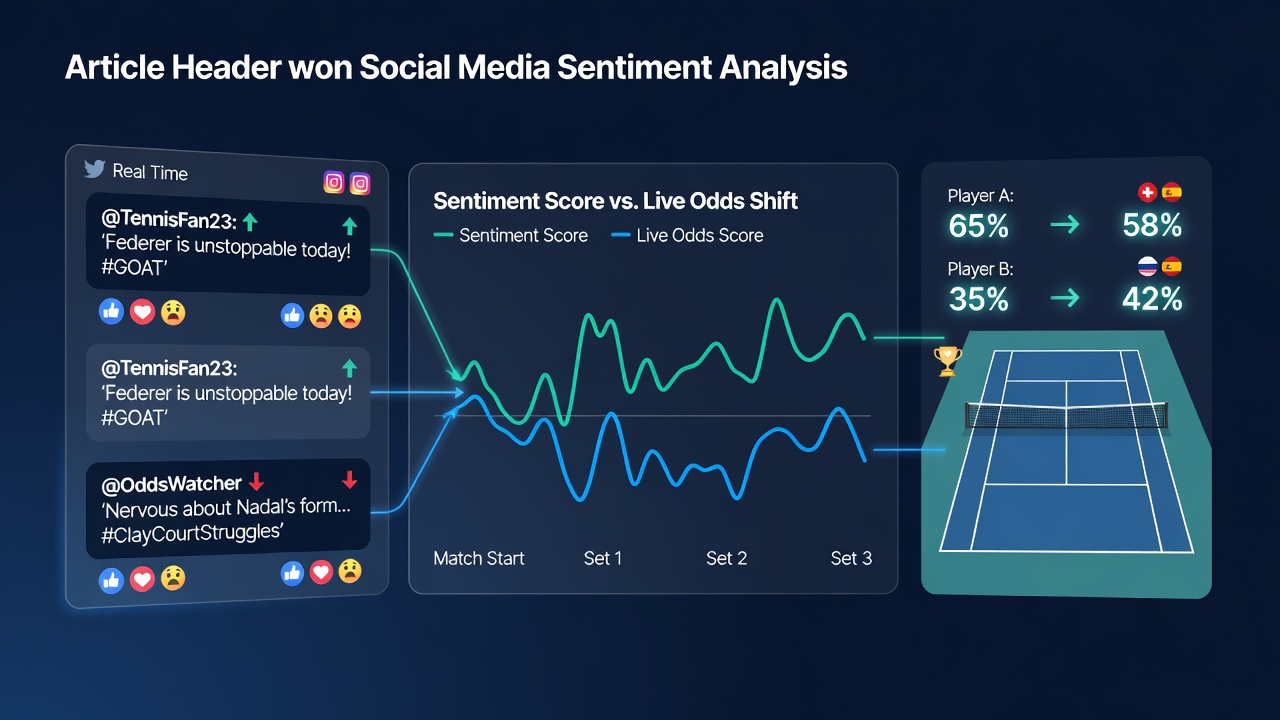
Analysts track how public discussions on platforms such as X and Instagram align with shifts in live tennis betting markets during events like the Australian Open and Wimbledon, where sentiment scores derived from natural language processing models show measurable ties to odds adjustments made by operators. Data collection often pulls from millions of posts tagged with player names and match hashtags, then processes them through algorithms that assign positive, negative, or neutral values based on volume and tone. Those metrics frequently precede or coincide with changes in point-spread and moneyline figures offered in real time.
Data Patterns Observed Across Major Events
Studies conducted on Grand Slam tournaments reveal that spikes in negative sentiment toward a player correlate with rapid widening of live odds against that competitor, particularly when injury concerns or fatigue surface in online conversations during sets. In one analysis covering the 2025 US Open, researchers noted that a 15 percent increase in critical posts about a seeded player within the first hour of a match aligned with average odds movements of 0.3 to 0.7 points in the opposing direction. Similar patterns emerged at the French Open, where clay-court specialists saw sentiment-driven volatility spike when weather-related comments flooded feeds and prompted quick recalibrations by pricing teams.
October 2026 saw continued monitoring during the Asian swing of the ATP and WTA tours, where matches in Tokyo and Beijing provided fresh datasets showing that player form discussions on social channels tracked closely with in-play adjustments for underdog victories. Aggregated figures from multiple operators indicated that sentiment indices built from geotagged posts outperformed baseline statistical models in predicting short-term odds swings by margins ranging from 8 to 12 percent accuracy gains.
Technical Approaches to Sentiment Tracking
Bookmakers and data providers apply machine learning classifiers trained on labeled tennis-specific corpora to convert unstructured text into quantifiable signals, then feed those outputs into automated pricing engines that update live markets every few seconds. The process incorporates volume weighting so that a surge of posts from verified accounts carries greater influence than scattered casual mentions, while language filters separate match-related commentary from unrelated chatter. External feeds from regulatory bodies such as the Australian Gambling Research Centre supply context on market integrity, allowing operators to cross-reference sentiment signals against known manipulation indicators.
Third-party vendors often combine these sentiment layers with traditional inputs including serve percentages, break-point conversion rates, and historical head-to-head results, creating hybrid models that reduce latency between public mood shifts and odds revisions. Observers note that tournaments with high social media engagement, such as night sessions at the Australian Open, generate denser data streams and therefore tighter observed correlations.
Regional Variations and Tournament-Specific Findings
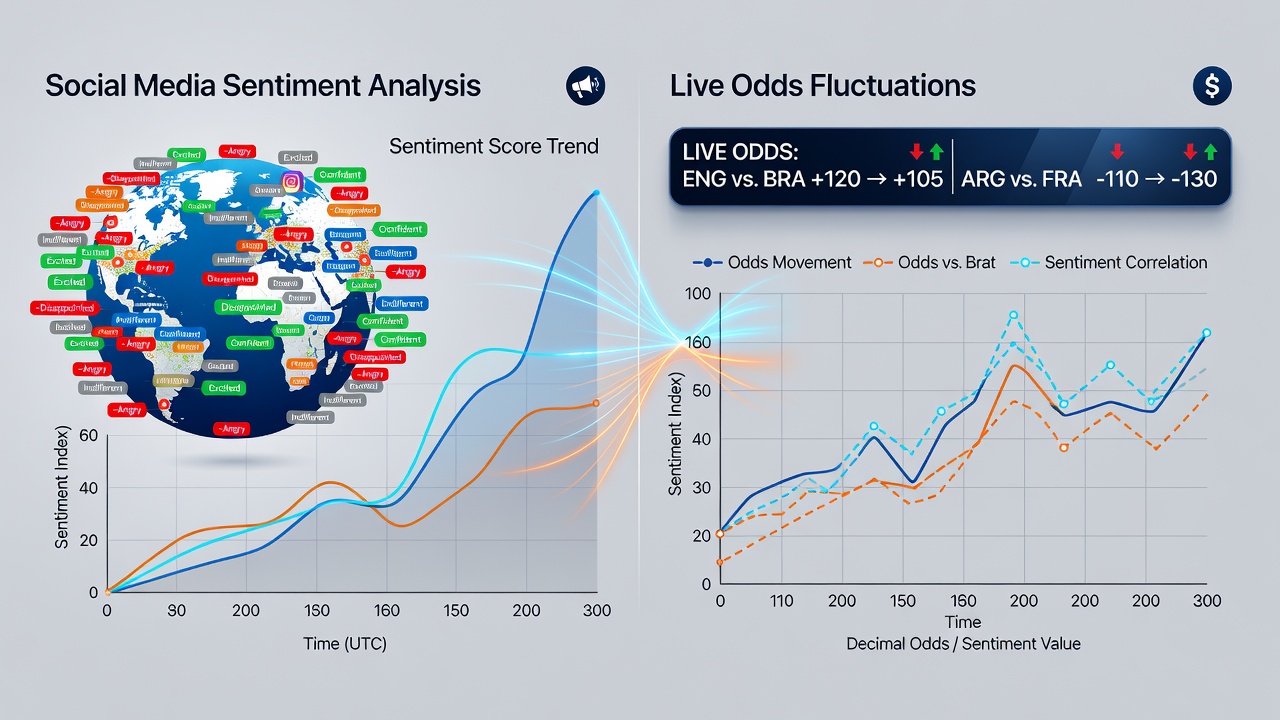
European events display different sentiment-odds linkages compared with North American or Asian stops because of language diversity and platform preferences, with French-language posts during Roland Garros carrying distinct lexical markers that require separate training datasets. Canadian regulators have documented cases where aggregated sentiment data helped identify unusual betting clusters ahead of line movements, prompting reviews under provincial gaming statutes. Academic teams at institutions including the University of Sydney have published peer-reviewed examinations showing that Twitter-derived sentiment indices explained up to 22 percent of variance in live-set betting prices across a sample of 340 matches from 2024 through 2026.
Operators in Australia and parts of Asia integrate these signals more aggressively than some North American counterparts, partly because local rules encourage real-time risk management tools that incorporate non-traditional data streams. The result appears in narrower response windows where odds shift within 90 seconds of sentiment threshold breaches rather than waiting for on-court statistical confirmation alone.
Conclusion
Available evidence from multiple international tournaments demonstrates consistent statistical associations between processed social media sentiment and subsequent live odds movements in tennis markets, with the strength of those links varying by event, time of day, and player popularity. Continued refinement of natural language models and expanded access to anonymized betting datasets will likely sharpen understanding of these relationships without altering the underlying factual patterns already recorded through 2026.