19 Aug 2026
The Interplay Between Behavioral Economics and Risk Assessment in Live Streaming Competition Bets
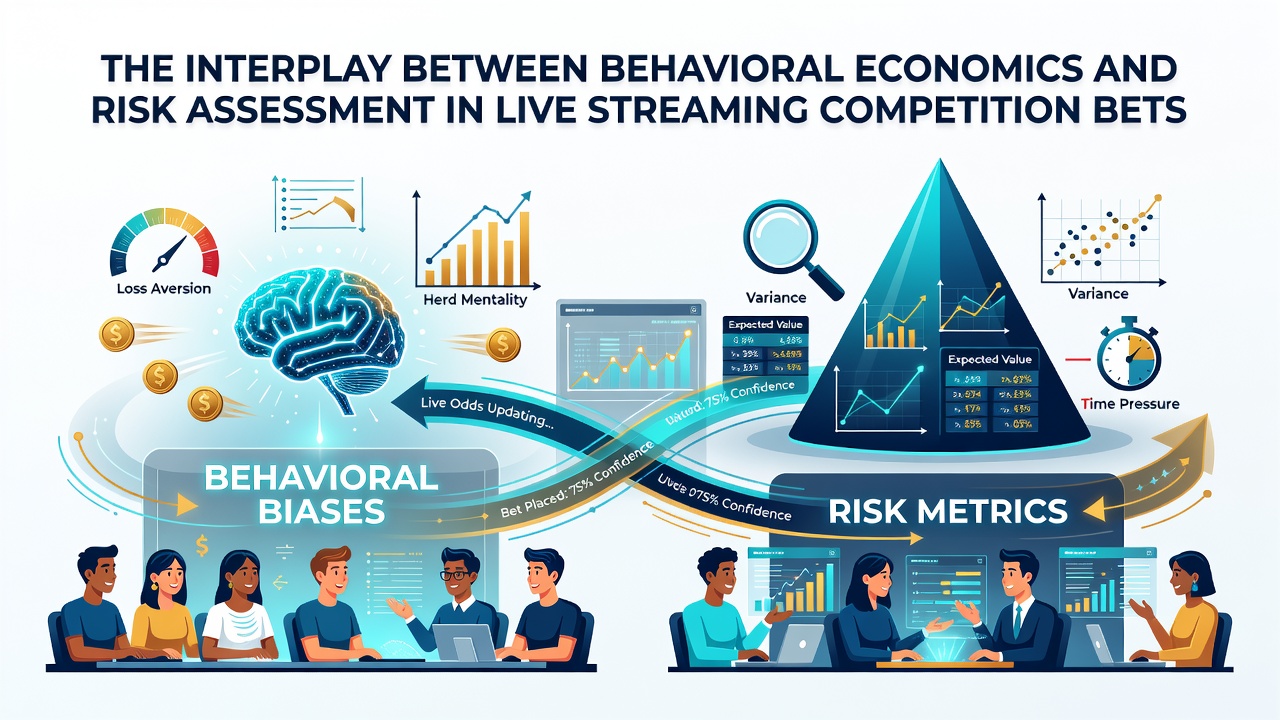
Live streaming competition bets operate through platforms that integrate real-time video feeds with wagering interfaces, allowing participants to place stakes on outcomes as events unfold before their eyes, and researchers have documented how behavioral economics shapes the way individuals process risk information in these fast-paced settings.
Core Principles of Behavioral Economics Applied to Betting
Behavioral economics examines systematic patterns in decision making that deviate from purely rational models, and studies show that concepts such as loss aversion, anchoring, and overconfidence appear frequently among those who engage in live streaming competition bets. Loss aversion leads participants to weigh potential losses more heavily than equivalent gains, which data from multiple academic investigations indicate can prompt quicker stake adjustments when odds shift during a broadcast. Anchoring occurs when initial odds or early event highlights set reference points that influence subsequent evaluations, even as new information arrives through the live stream. Observers note that these biases interact with the continuous flow of visual and statistical updates, creating environments where rapid recalibrations happen based on both presented data and cognitive shortcuts.
Risk Assessment Processes in Dynamic Betting Contexts
Risk assessment in this domain involves evaluating probabilities, potential payouts, and timing constraints under conditions of uncertainty, while platforms supply tools such as live statistics overlays and historical performance metrics to support those calculations. Research indicates that bettors combine quantitative indicators with qualitative cues from the stream itself, including player demeanor and commentator tone, to form judgments about event trajectories. Those who study these markets have found that risk perception changes measurably when information arrives incrementally rather than in batches, because sequential updates allow biases to accumulate before a final decision point. Platforms in turn employ algorithmic risk models that adjust odds in response to betting volume, and these systems interact with user behavior patterns observed across large datasets.
The Interaction Between Biases and Real-Time Risk Evaluation
Live streaming adds a layer of immediacy that amplifies the effects of behavioral tendencies during risk assessment, because participants must integrate visual evidence, shifting odds, and time pressure into single decisions. Experts have observed that loss aversion intensifies when a bettor watches an event in progress and sees an early lead erode, prompting stake increases that might not occur with delayed information. Overconfidence can emerge when commentators highlight favorable statistics, leading individuals to underestimate variance in remaining outcomes. Data from industry reports reveal that session lengths on streaming betting platforms correlate with higher frequencies of repeated small adjustments, consistent with anchoring effects resetting around each new visual cue. These patterns hold across different competition formats, from esports tournaments to live sports exhibitions, though the speed of information delivery varies by event type.
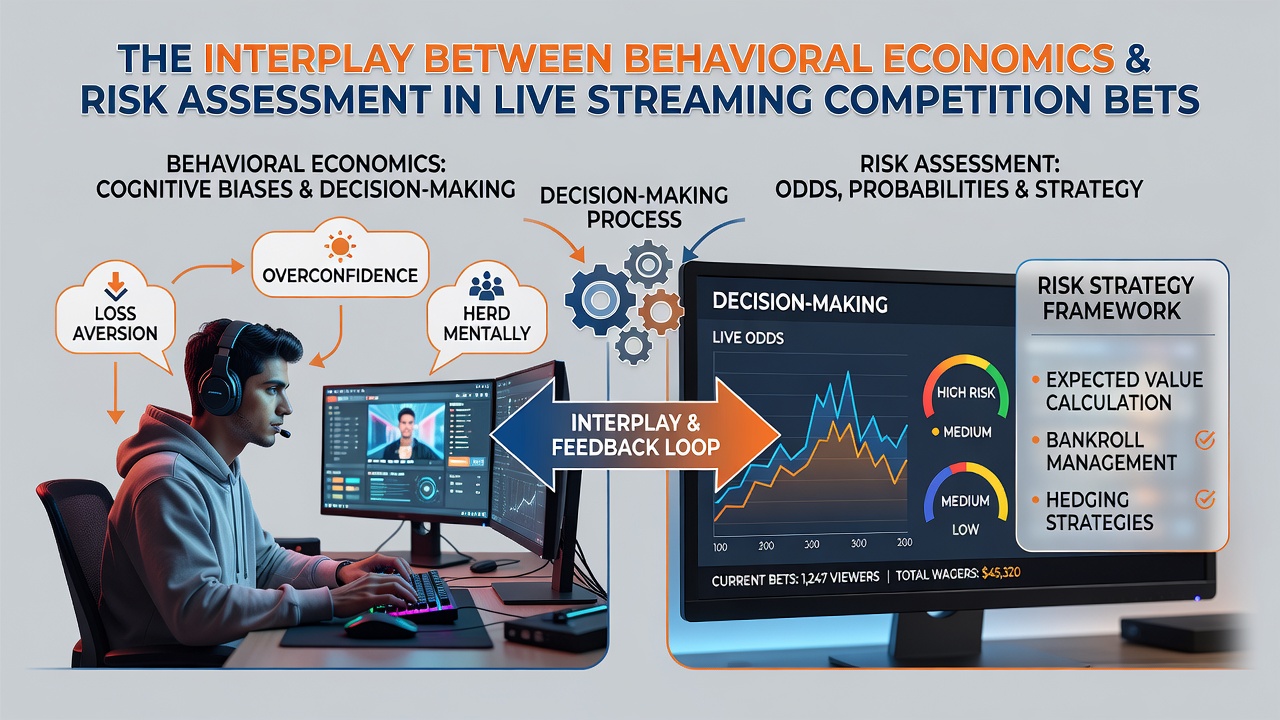
Regulatory bodies in several regions have examined how these dynamics affect participant outcomes, and figures from the Australian Competition and Consumer Commission highlight the role of disclosure requirements around real-time odds changes. Similar analyses conducted by Canadian provincial authorities underscore the importance of transparent risk warnings embedded within streaming interfaces. Academic work published through the National Bureau of Economic Research has explored comparable mechanisms in digital markets more broadly, demonstrating that sequential decision environments increase the persistence of initial reference points. In August 2026, updated platform features in multiple jurisdictions incorporated additional visual risk indicators designed to counter common anchoring patterns identified in earlier studies.
Empirical Evidence and Platform Adaptations
Empirical studies tracking live streaming competition bets have recorded measurable shifts in betting volume following specific on-screen events, such as a highlighted player statistic or an unexpected replay sequence. Researchers discovered that these volume changes align with periods when behavioral biases are most likely to influence risk assessments rather than purely statistical updates. Platforms have responded by testing interface modifications, including delayed confirmation prompts and aggregated historical comparisons, that aim to provide counterbalancing information during peak decision windows. Evidence suggests these adjustments produce measurable differences in average session outcomes across user cohorts, though results vary by competition category and participant experience level. Those who analyze transaction logs note that the interplay remains consistent even as technology evolves, because the underlying cognitive patterns persist across different streaming formats.
Conclusion
The documented connections between behavioral economics principles and risk assessment practices continue to shape how live streaming competition bets function across global platforms. Data from regulatory reviews and academic analyses demonstrate that real-time information delivery interacts with established cognitive patterns in predictable ways, prompting ongoing refinements in both user interfaces and oversight mechanisms. As technological capabilities advance, the same fundamental relationships between bias, information flow, and evaluation processes remain central to understanding participant behavior in these environments.